
The Unwinnable Game
Civility, Violence, and the Prisoner's Dilemma in Modern Politics
The man who sent pipe bombs to the homes of Barack Obama and Hillary Clinton was a Trump supporter. The man who tried to kidnap Michigan’s governor was a Trump supporter. The man who attacked Paul Pelosi with a hammer was a Trump supporter. The list goes on, a relentless drumbeat of politically motivated violence.
In the face of this escalating, one-sided aggression, the persistent call from well-meaning liberals for a "return to civility" is a strategic blunder. It is a unilateral plea for de-escalation in a conflict where one side has demonstrated, repeatedly, its contempt for the concept. To continue offering an olive branch when the other side sees it as a white flag is an act of profound political naivete. The time has come to abandon this failed strategy and embrace the hard-headed logic of deterrence.
A Pattern of Aggression
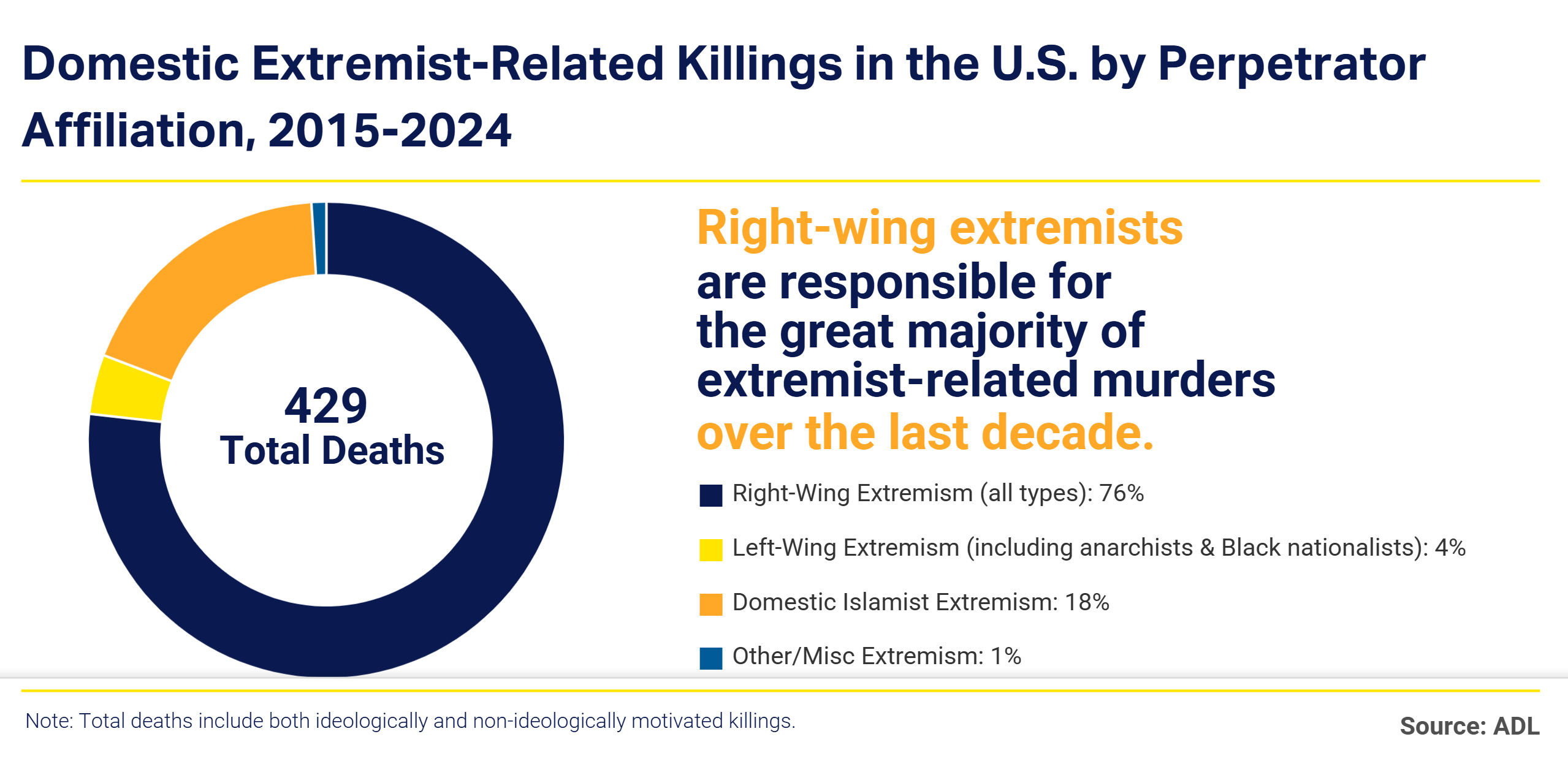
Let us be clear about the nature of the threat. This is a case of asymmetric violence. The data paints an unambiguous picture. According to the Anti-Defamation League, right-wing extremists were responsible for 76% of all domestic extremist-related killings in the United States over the last decade. Just 4% were committed by those on the far-left.
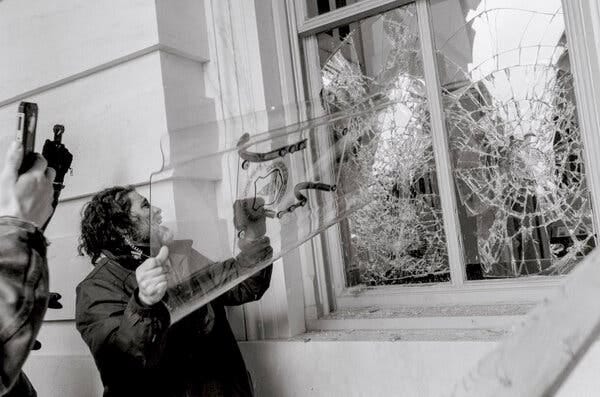
This pattern is a feature, encouraged and sanctioned from the highest levels of the Republican party. When asked to denounce right-wing extremism, Donald Trump famously told the Proud Boys to "stand back and stand by", a command they heard loud and clear before helping lead the insurrection on January 6th. More recently, in a Fox News interview, he offered a chilling justification for this aggression: “The radicals on the right oftentimes are radical because they don’t want to see crime.”
This is the language of incitement, framing violence as a righteous response. This rhetoric is then translated into policy. On his first day back in office, Trump granted clemency to every person convicted for their actions on January 6th, hiring some for key government positions. His administration has simultaneously shifted resources away from FBI units that monitor white supremacist threats. The message is unmistakable: violence in service of the cause will be excused, and those who commit it will be rewarded.
The Civility Trap
Faced with this reality, the standard liberal response, to call for dialogue, to take the high road, to appeal to our better angels, is based on a catastrophic misreading of the situation. It treats a strategic assault as a mutual misunderstanding. The intellectual framework of game theory reveals the flaw in this thinking.
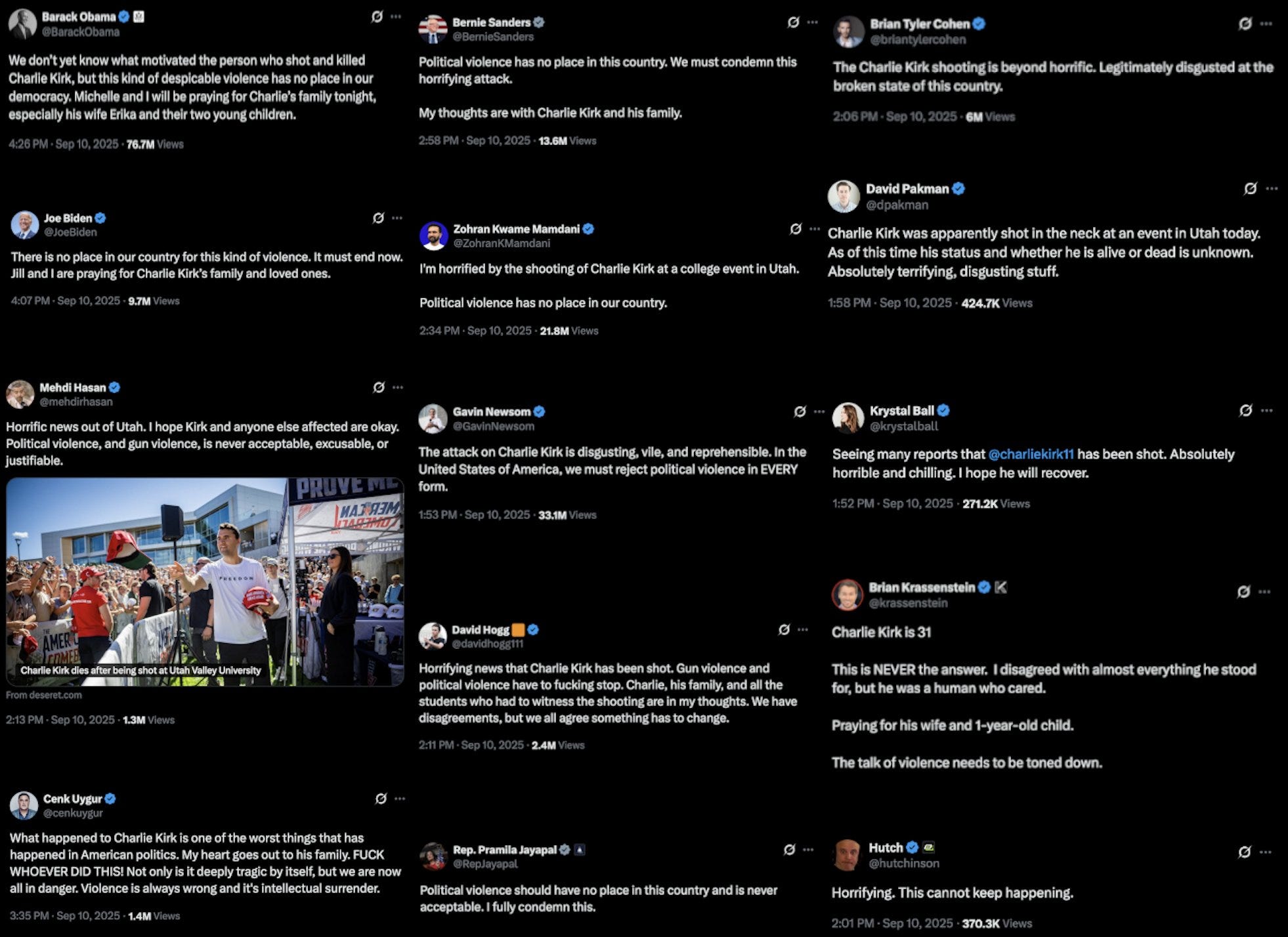
Politics can be modeled as a "Prisoner's Dilemma," a scenario where two parties must decide whether to cooperate or defect. The outcomes are clear:
Mutual Cooperation: Both sides adhere to democratic norms of civility and forbearance, resulting in a stable, functioning republic.
Mutual Defection: Both sides abandon norms and engage in open political warfare, resulting in civil strife, a terrible outcome, but one in which neither side gains total victory.
One-Sided Defection: One side remains civil and cooperative while the other defects, using aggression and illiberal tactics. For the defector, this is the most profitable short-term outcome. For the cooperator, it is the absolute worst-case scenario: subjugation and the collapse of their political project.
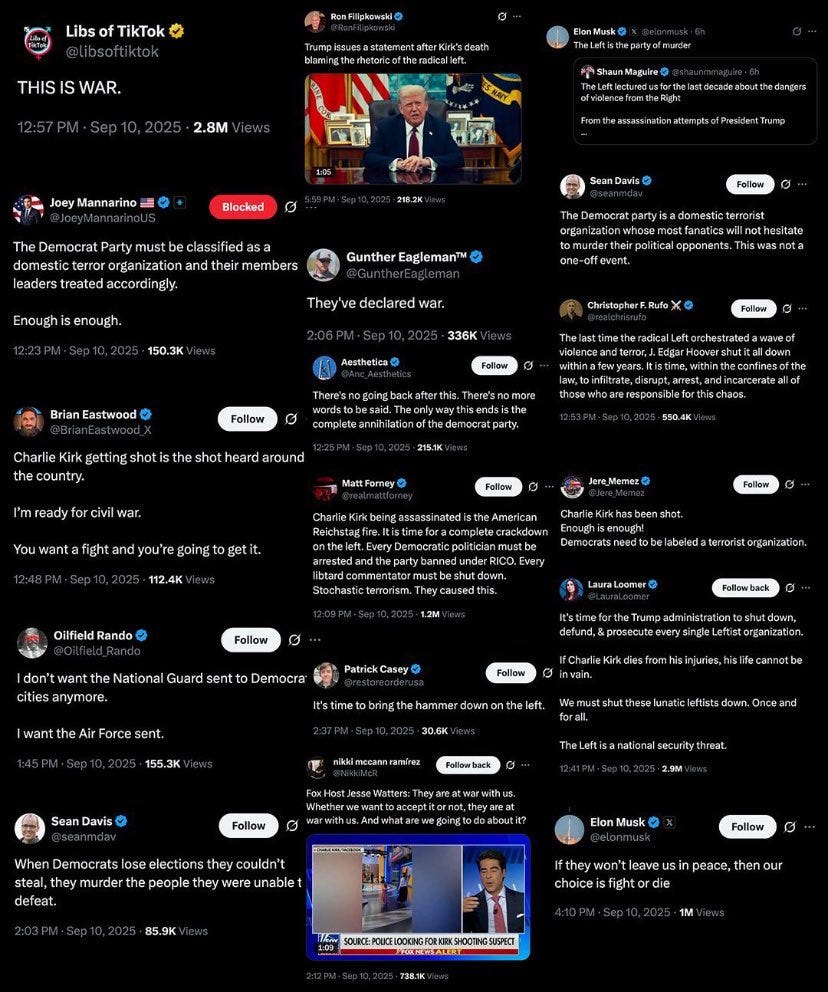
The modern Republican party consistently chooses to defect. In this context, a unilateral commitment to civility guarantees the worst possible outcome. It is a strategically suicidal choice, signaling to the aggressor that defection carries no cost and will be met with no resistance. The most compelling counter-argument, that a retaliatory posture risks an uncontrollable spiral into violence, misunderstands the goal. The logic mirrors the Cold War's doctrine of Mutually Assured Destruction. Peace is maintained by the absolute certainty that aggression will be met with devastating retaliation, making the first strike an act of suicide.
Deterrence, Not Appeasement
A new strategy is required: a political "Tit-for-Tat." This is a call for a policy of disciplined, non-violent, reciprocal deterrence. The strategy is nice (it never defects first), retaliatory (it immediately punishes defection), and forgiving (it returns to cooperation the moment the opponent does).
What does this look like in practice? It means when we are asked to denounce political violence, we respond with a clear condition: "We will do so in unison the moment Donald Trump does the same, clearly and without caveat." It means responding to the violation of a political norm, like the bad-faith blocking of appointments, with a relentless procedural hardball that grinds the legislative process to a halt until the norm is restored. It means answering politically motivated lawsuits and investigations with equally vigorous, legally grounded actions of our own.
This is a tested idea. The American Civil Rights Movement, while morally grounded in non-violence, was a masterclass in Tit-for-Tat strategy. Through boycotts, sit-ins, and marches, it imposed crippling economic and social costs on the segregationist system. It was a clear retaliation against the defection of Jim Crow, demonstrating that the status quo of oppression would no longer be cost-free.
This strategic dilemma is global. In Portugal, mainstream parties grapple with how to handle the rise of the far-right Chega party. A cordon sanitaire, or policy of refusal to engage, is a passive strategy that risks allowing the aggressor to set the terms of debate. A Tit-for-Tat approach would be more active: for every illiberal provocation, a unified and proportional response that imposes a direct political cost, demonstrating that such tactics will be unprofitable. As the work of political scientists Steven Levitsky and Daniel Ziblatt shows, when one side abandons the core democratic norms of "mutual toleration" and "institutional forbearance," the other side's adherence to those same norms becomes a liability.
The Only Path to Peace
A state of mutual, reciprocal toughness is far from the ideal. It is, however, vastly preferable to the alternative of unilateral political disarmament. A civil war is a tragedy; a one-sided slaughter is a genocide.
Sustainable peace is achieved through strength. The moral choice is to make it clear that a punch will be met with a block and a counterpunch, making the initial aggression an unattractive option. This requires a fundamental shift in the liberal mindset.
The call to action is threefold. For voters, it is time to demand strategic toughness from your leaders, valuing a capacity for deterrence over performative civility. For politicians, it is time to stop making unilateral concessions and to start imposing real costs for illiberal behavior. And for the media, it is time to stop framing this crisis as "polarization" and start describing it for what it is: a sustained assault by one side on the foundations of democratic order, and a strategically flawed response from the other. The path back to a civil society runs through a credible and unwavering commitment to mutual deterrence.